


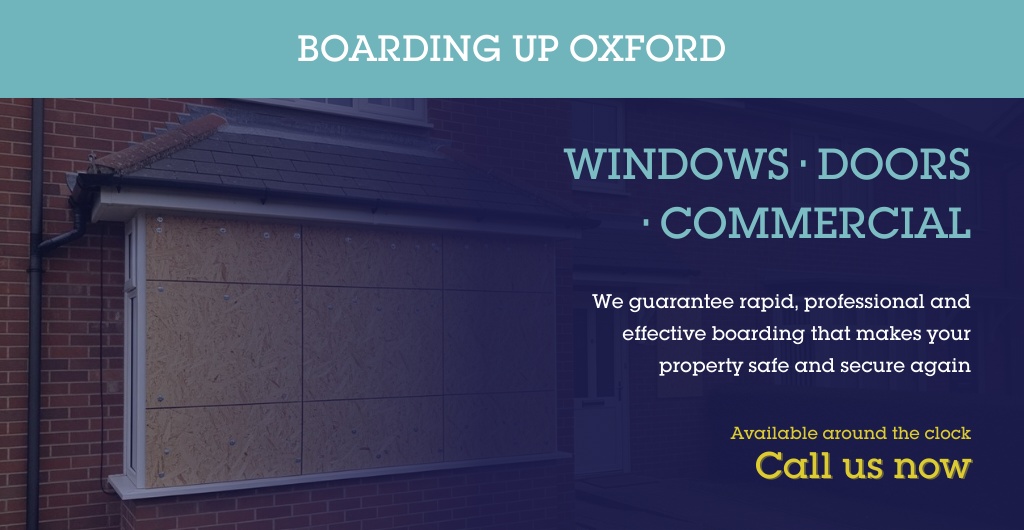
Boarding Up Situations in Oxford (OX) – What To Do When Something Goes Wrong
When you’re dealing with a break-in, a smashed window, or sudden storm damage, it’s hard to think clearly. The priority is always the same: make safe, secure the property, and reduce the chance of further damage or theft.
Boarding Up Oxford provides emergency boarding up across Oxford and the OX postcodes (OX1–OX49). We’re fully insured, have been trading for 10+ years, and our technicians are DBS-checked. If you need urgent help—especially out of hours—use our dedicated emergency page: emergency boarding up.
The situations we’re called out to most often
Boarding up isn’t just for burglary. We’re typically called when an opening needs securing quickly—windows, doors, shopfront glazing, rooflights, or anything that’s left the building exposed.
Here are the most common situations we deal with around Oxford and the wider OX area:
- Burglary / attempted break-in: damaged locks, forced doors, broken panes and frames
See: boarding up after burglary repairs - Vandalism: a smashed window, damaged shopfronts, repeated targeting
See: boarding up after vandalism - Storm damage: wind-blown debris, failed panes, loosened roof elements
See: storm damage boarding and making safe - Fire damage: the fire may be out, but the property may be open or structurally unsafe
See: fire damage property securing - Flood damage: swollen frames and doors that won’t close properly, compromised glazing
See: flood damage property securing - Accident / impact damage: vehicles clipping walls, accidental breakage, internal impact to glazing
See: accident damage make-safe
If you’re unsure which situation fits, that’s fine. Tell us what’s happened and what’s exposed (window, door, shopfront, roof opening) and we’ll advise the best way to secure it.
What “boarding up” means in practice (and what it doesn’t)
Boarding up is a temporary security and weather protection measure. It’s designed to keep the property safe until permanent repairs are arranged.
Depending on the opening and risk level, we may use:
- Exterior-grade plywood (often 18mm for larger, higher-risk openings)
- OSB (commonly 12mm for smaller openings where appropriate)
- Anti-tamper fixings and methods that minimise the chance of boards being removed from outside
- Temporary steel doors for damaged entrances where boarding alone isn’t suitable
- Security screens for longer-term securing on vacant/void properties
What boarding up doesn’t do: it doesn’t replace glazing, rebuild frames, or provide full remedial works after a fire or flood. Our job is to secure the property and leave it stable and safe while you line up the next step.
If you want more detail on the principle and typical methods, see: what is boarding up?
What to do right now (a calm checklist)
If you’re reading this in a panic, use this as a simple order of actions.
- Check for immediate danger
- If anyone is injured or there’s ongoing risk (intruder still present, sparking electrics, unstable glass), call emergency services first.
- If it’s a crime, report it
- Get a crime reference number—your insurer may ask for it.
- Take photos if it’s safe
- Wide shots and close-ups of the damage help later (insurer, landlord, managing agent).
- Prevent further access
- Keep people away from broken glass. Don’t try to clear shattered panes with bare hands.
- Call for temporary boarding / make-safe
- For urgent work, use: emergency boarding up.
- Contact your insurer / managing agent
- Don’t worry if you don’t know what to say—we can provide the kind of documentation insurers typically request.
If you’re a tenant, notify your landlord or managing agent as soon as you can. If you’re responsible for site security (shop manager, facilities manager), the key is to get the opening secured and the scene documented.
How we handle situation call-outs across Oxford and OX postcodes
Every job is different, but the process is consistent and transparent—especially when you’re dealing with stress, contractors, and insurance all at once.
1) We ask the right questions on the phone
We’ll usually ask:
- What’s happened (burglary, vandalism, storm, fire, flood, accident)?
- What needs securing (window/door/shopfront/rooflight)?
- Is the property occupied or vacant?
- Any safety issues (loose glass, unstable frames, alarm going off, shared access)?
- Any access constraints (rear access, communal entrances, height/reach concerns)?
We don’t promise fixed arrival times because conditions vary, but we prioritise urgent calls and will give you a realistic ETA when you ring.
2) We choose the method that fits the risk
A ground-floor board up broken window in an occupied home is different from a shopfront boarded up after an incident. We’ll decide on:
- Sheet material and thickness (plywood/OSB)
- Fixing method (including anti-tamper where needed)
- Whether a temporary steel door is the safer option for a forced entry
- Whether additional securing is sensible if the property will be unattended
If the frame is too damaged for a non-destructive approach, we’ll explain the options before proceeding.
3) We make safe and leave clear documentation
Customers often need proof of what was done and when—especially for insurers and property managers. We can provide:
- Time-stamped photos of the secured openings
- An itemised invoice
- A short work statement describing materials and fixing method (useful for claims and records)
For guidance on the insurance side, see: insurance claims support for boarding up.
Typical situations (and what securing looks like)
Burglary and attempted break-ins
After a forced entry, you may have a broken door, split frame, or shattered glazing. The aim is to secure property after burglary so you can sleep or close up safely.
Depending on the damage, we may:
- board up door openings where the door leaf is compromised
- board windows and sidelights using anti-tamper fixings where the property may be left unattended
- fit a temporary steel door where the entrance can’t be reliably secured with timber alone
Related: burglary repairs and boarding and door boarding in Oxford.
Vandalism and repeated targeting
Vandalism often happens in clusters—especially to ground-floor glazing and shopfronts. If you’ve had a smashed window, quick action reduces the chance of a second incident overnight.
We focus on:
- fast temporary boarding to remove easy access
- strong fixing methods that can’t be simply pulled off from outside
- keeping the site neat and safe for customers, staff, or residents
Related: vandalism repair boarding up and window boarding in Oxford.
Storm damage and weather exposure
Storm damage can leave a property open to rain, wind, and falling debris. Boarding up here is as much about weather protection as security.
We may:
- board damaged windows and doors to keep wind-driven rain out
- secure vulnerable roof openings where safe access is possible
Related: storm damage boarding and roof boarding in Oxford.
Fire and flood aftermath
After fire or flood, openings may be compromised even if the main structure stands. Doors swell, frames warp, and glazing fails.
We’ll help you make safe and secure exposed areas, but it’s important to be clear about scope:
- We secure the building and help protect against unauthorised access.
- We don’t provide smoke/odour remediation or full drying/restoration.
Related: fire damage securing and flood damage securing.
Choosing the right service for the situation
If you’re unsure what you need, these guides explain the solution side (rather than the event):
- For broken panes and vulnerable glazing: window boarding in Oxford
- For forced entries and damaged entrances: door boarding in Oxford
- For commercial glazing and larger openings: shopfront boarding in Oxford
- For rooflights and overhead openings: roof boarding in Oxford
If your issue is security around a site boundary rather than an opening in the building, you may need: temporary fencing.
FAQs about boarding up after an incident in Oxford
How quickly can emergency boarding up be arranged in Oxford?
We prioritise urgent jobs and aim to attend as quickly as we can, including out of hours. Workload, travel distance across OX postcodes, and site access can affect timing, so we’ll give you a realistic ETA on the phone. For urgent help, go to: emergency boarding up.
Can you board up a smashed window tonight?
In many cases, yes—this is a common reason people call us. If you’ve got a smashed window and the opening is accessible and safe to work on, we can usually arrange 24/7 boarding up as an emergency make-safe.
Is boarding up covered by insurance?
Often it can be, depending on your policy and what caused the damage (burglary, vandalism, storm, etc.). We’re not loss adjusters, but we can provide photos and an invoice to support your claim. More guidance here: insurance claims.
Do you repair the window/door as well as boarding it?
Boarding up is a temporary security measure. We secure the opening to prevent further loss or damage; permanent repairs are typically handled by a glazier, builder, or your insurer’s contractor. If you need a secure entrance in the meantime, a temporary steel door may be an option—ask when you call.
What’s the difference between plywood boarding and a security screen?
Plywood/OSB boarding is usually the fastest way to secure an opening after an incident. Security screens are generally better for longer-term protection (for example, void properties) because they’re more durable and designed for repeat access without replacing boards each time.
Will boarding up damage my window frames?
We always try to use fixing methods that are appropriate to the situation and substrate. Sometimes, especially after impact damage or rot, the surrounding frame is already compromised—if non-destructive methods aren’t possible, we’ll explain why and talk you through the safest option before we proceed.
Can you secure commercial premises and provide paperwork for management/insurers?
Yes. We regularly work with shop owners, landlords and facilities teams. We can provide time-stamped photos and an itemised invoice, and we’ll write down what was secured and how—helpful for internal reporting and insurance.
Need help now, or want advice on what to do next?
If you need to secure property after burglary, vandalism, storm damage, or an accident, we can help with emergency boarding up and temporary securing across Oxford and OX1–OX49.
Need help now? Call 01865 537 160 or email us and we’ll talk you through the next steps.
