


What Is Boarding Up? (Oxford & OX Postcodes)
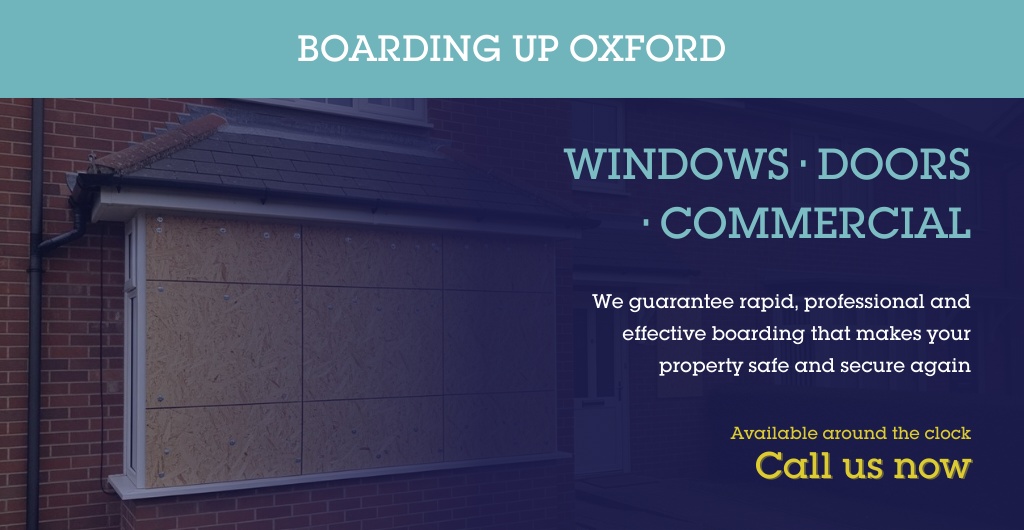
Boarding up is the process of securing broken, vulnerable, or missing openings—most often windows, doors, shopfront glazing, and rooflights—using strong sheet materials or purpose-made security systems. The aim is simple: to make the property safe, reduce further damage, and prevent unauthorised access until permanent repairs can be completed.
If you’re dealing with a smashed window, a forced door, or storm damage in Oxford or anywhere across the OX postcodes, boarding up is usually the fastest way to secure property and keep things stable while you speak to your insurer, glazier, or builder. If you need urgent help, see our emergency boarding up page.
When boarding up is needed (and why it matters)
People often search “board up broken window” or “who can board up my window tonight in Oxford” because the problem isn’t just the glass—it’s what happens next.
Boarding up is commonly used after:
- Burglary or attempted break-in (damaged frames, kicked-in doors, pry marks) – see burglary repairs and boarding
- Vandalism (smashed window, repeated targeting, exposed shopfronts) – see vandalism repair and boarding
- Storm damage (blown-in panes, loose rooflights, wind-driven rain) – see storm damage boarding
- Accidents/impacts (vehicles, bins, falling branches) – see accident damage boarding
- Fire or flood incidents, once the immediate danger has passed and the building needs securing – see fire damage securing and flood damage securing
What boarding up prevents
A properly fitted board-up isn’t just a visual deterrent. It helps prevent:
- Further break-ins (especially when a property will be unattended)
- Weather ingress that causes secondary damage (soaked floors, swelling timber, ruined plaster)
- Injury risk from broken glass and sharp edges
- Escalation of the incident (opportunistic entry, anti-social behaviour, theft of contents)
In Oxford, we see a mix of student lets, period homes, modern flats, retail units and light industrial sites across OX1–OX49. The right method depends on what’s been damaged, how accessible the opening is, and how long you need the property secured.
Boarding up vs “just covering it” (what counts as a proper make safe)
In an emergency, it’s tempting to tape up glass or hang a sheet over the opening. That might stop a draught for an hour—but it usually doesn’t address security or safety.
A professional make safe typically includes:
- Removing or stabilising loose shards (where safe and appropriate)
- Measuring the opening correctly (including rebates and fixing points)
- Selecting suitable materials (e.g., 18mm exterior-grade plywood for high-risk openings)
- Installing boards with fixings that resist tampering from outside
- Checking that the board-up doesn’t create new hazards (trip points, sharp edges, blocked access routes)
If the frame is too damaged for non-destructive fixing methods, we’ll explain the options before proceeding—especially important for listed-style features or where you’re trying to preserve frames ahead of a repair.
What materials are used for boarding up?
There isn’t one “best” boarding material for every job. The goal is to match the method to the risk, the opening type, and how long it needs to hold.
Plywood boarding (common for emergency security)
For many call-outs—especially when someone has a smashed window or a forced entry—exterior-grade plywood is the go-to option.
- Often used in 18mm thickness for robust security
- Strong, impact-resistant, and reliable for medium-term securing
- Suitable for windows, doors (in certain configurations), and shopfront panels
This is commonly what people mean when they ask for temporary boarding or emergency boarding up.
OSB (Oriented Strand Board) (sometimes suitable for smaller/low-risk openings)
OSB can be a practical choice in certain settings where the risk is lower or the opening is smaller.
- Often used around 12mm for lighter applications
- Can be cost-effective and quick to deploy
- Not always ideal for higher-risk street-facing openings
We’ll advise on what’s appropriate rather than defaulting to one material for every scenario.
Temporary steel doors (when the door itself is compromised)
If you need to board up door damage but the frame and surrounding structure allow, a temporary steel door can be a better solution than a boarded entrance—especially for ongoing access requirements.
- Gives a lockable, secure entry point
- Useful after forced entry, arson attempts, or repeated targeting
- Often chosen for vacant properties, managed buildings, and commercial sites
Learn more on our door boarding services page.
Steel security screens (for longer-term void security)
For properties that will be empty for weeks or months (probate, renovation, between tenancies), steel screens can provide longer-term protection than standard timber boarding.
This is particularly relevant for vacant buildings—see vacant property boarding and security.
What gets boarded up? (windows, doors, shopfronts, roofs)
Boarding up isn’t limited to domestic windows. We regularly secure:
- Windows: ground-floor panes, rear elevations, side access windows, communal blocks
Related: window boarding in Oxford - Doors: front/back doors after forced entry, damaged frames, insecure locks
Related: door boarding in Oxford - Shopfronts: large glazing panels, repeated attacks, overnight exposure
Related: shopfront boarding - Rooflights and skylights: storm-lifted units, impact cracks, missing panels
Related: roof boarding
If you’re unsure what you need, you can contact us and describe what’s happened (photos help if it’s safe). For urgent situations, use our 24/7 emergency boarding up page.
How the boarding up process works (what to expect)
Every job is different, but most Oxford call-outs follow a practical sequence. Here’s what usually happens.
-
You tell us what’s happened
- Is it a smashed window, a forced door, or a shopfront boarded up requirement?
- Is anyone at risk, and is the site safe to approach?
- Is it occupied, vacant, or commercial?
-
We give you a realistic ETA We don’t promise fixed arrival times—traffic, weather, and existing emergencies can affect timing. We prioritise urgent calls and will give you the most realistic estimate we can over the phone.
-
On-site assessment We check:
- The condition of the frame/substrate (can we fix without causing extra damage?)
- The size and shape of the opening
- Any hazards (glass, unstable panels, access constraints)
-
Make safe and secure Depending on the situation, this can include:
- Boarding the opening with correctly sized sheet material
- Using appropriate fixings (including anti-tamper options where needed)
- Ensuring the result is secure and stable
-
Documentation Customers often need proof for landlords, managing agents, or insurers. Where appropriate, we can provide:
- Time-stamped photos
- An itemised invoice
- A clear statement of works completed
For cost considerations and what affects pricing, see boarding up pricing. For claims guidance, see insurance claims support.
Is boarding up covered by insurance?
Often, boarding up (as an emergency make safe measure) can be claimed—particularly after burglary, vandalism, storm damage, or accidental impact. Coverage depends on your policy terms, excess, and whether the incident is covered.
Practical steps that usually help your claim:
- Take photos of the damage (if safe) before anything is moved
- Keep your crime reference number if the police attended
- Notify your insurer as soon as you can
- Keep invoices and notes of what was done and why
We’re not loss adjusters and can’t approve claims, but we can supply the documentation insurers typically request. More guidance is on our insurance claims page.
How long can boards stay up?
Boarding is meant to be temporary, but “temporary” can mean different things:
- Short-term (overnight to a few days): common after a smashed window while waiting for glazing
- Medium-term (days to weeks): common where frames need joinery work or parts are delayed
- Longer-term (weeks/months): better handled with more robust solutions (e.g., steel doors/screens) rather than relying on timber indefinitely
If you tell us your likely repair timeline, we’ll recommend the most suitable approach for safety, access, and security.
Can boarding up be done without damaging the frame?
Sometimes yes, sometimes no—and it depends on what you’re fixing into.
Where possible, we aim for secure methods that don’t unnecessarily damage:
- Window frames and reveals
- Masonry around the opening
- Shopfront surrounds
However, if the frame is already split, rotten, or has been forced open, it may not hold fixings safely. In those cases, we’ll talk you through the options and the trade-offs before work starts.
Boarding up for homes vs shops vs vacant buildings
Residential properties
Homeowners, tenants and landlords usually want a quick board up broken window solution that’s safe, neat, and insurable. We commonly work on houses, flats and shared blocks—see residential boarding up.
Commercial properties
Shops, restaurants, offices and industrial units often need out-of-hours attendance and clear documentation for facilities teams or insurers. Shopfront glazing also tends to require larger panels and stronger fixing strategies—see commercial boarding up.
Vacant properties
When a building is empty, the risk profile changes: there’s more time for someone to attempt entry, and issues might go unnoticed for longer. Longer-term security options are often more cost-effective than repeated timber board-ups—see vacant property security.
FAQs: What is boarding up?
How quickly can boarding up be arranged in Oxford?
We prioritise urgent calls and aim to attend as quickly as possible, but we don’t guarantee fixed response times. When you call, we’ll give you a realistic ETA based on location, time of day and current workload.
What should I do if my window is smashed right now?
If there’s immediate danger or a crime in progress, call 999. If it’s safe, take photos, keep people away from broken glass, and contact us to secure property and make safe the opening. For urgent assistance, visit emergency boarding up.
Do you board up doors as well as windows?
Yes. We can board up door openings and, where suitable, install temporary steel doors for better security and ongoing access. See door boarding.
Can you board up a shopfront overnight?
Yes—this is a common out of hours request after break-ins or vandalism. We can shopfront boarded up openings to reduce the risk of further entry and weather damage. See shopfront boarding.
Is boarding up the same as glazing repair?
No. Boarding up secures the opening; glazing repair replaces the glass permanently. Boarding is often the first step to stabilise the situation—especially at night, in bad weather, or when specialist glass isn’t immediately available.
Will the boarded area be weatherproof?
Boarding significantly reduces wind and rain entering the property, but absolute weatherproofing depends on the damage (especially if frames are distorted or masonry is cracked). We’ll secure the opening as effectively as possible and explain any limitations on site.
Do you cover my area in the OX postcodes?
Yes—we cover Oxford and the wider OX area (OX1–OX49). You can view areas we cover to find your nearest page.
Next step: get your property secured
If you need temporary boarding, help after a smashed window, or emergency boarding up in Oxford or the OX postcodes, we’re here to help.
Ready to get started? Call 01865 537 160 or email us for advice and a free, no-obligation quote.
